

TL;DR: Walking at night as a pedestrian in Missouri is legal, even in dark clothing. There’s no law against it. But being hard to see raises your crash risk and hands insurers their favorite argument: that you weren’t visible enough. The most reliable protection is reflective material that moves with your body plus a small light. Even if you are partly at fault, you may still have a claim.
Table of Contents
When the clocks fall back each November, evening commutes start going dark by around 5 p.m. More people are walking in the dark to the car, the bus stop, or the dog’s usual loop right as drivers are adjusting to shorter days. Here’s what keeps you safer in case of a pedestrian car accident, how Missouri law actually works, and what to do if the worst happens.
What actually makes you visible after dark (and the myth that dark clothing is illegal)
First, the myth: wearing dark clothes at night is not illegal in Missouri. No statute bans it. Visibility is a safety and fault question, not a legal one, but it matters a great deal for both.
Light-colored fabric helps only a little after dark. What truly works is reflective clothing for walking at night, which bounces a driver’s headlights straight back toward them. Here’s what makes you visible, roughly in order of impact:
- Reflective material on moving joints: ankles, wrists, and knees. Motion at those points reads as “human” to a driver’s eye far faster than a static strip. Researchers call this the biomotion effect.
- A reflective vest or sash across your torso, so you register as a person rather than a random glint.
- Reflective walking clothes over light-colored layers, as the combination beats either one alone.
- A small white front light and a red rear blinker, especially where there are no sidewalks.
- Light aimed where drivers approach, not pointed down at your feet.
If you’re buying, the best reflective gear for walking at night pairs reflective clothing for walking with active lighting. See the NHTSA pedestrian safety resources and the Federal Highway Administration’s work on pedestrian lighting for the research behind this.
Where pedestrians have the right-of-way in Missouri (and where they don’t)
Right-of-way isn’t all-or-nothing. In plain terms:
- At crosswalks and intersections (marked or unmarked), drivers generally must yield to pedestrians who are crossing.
- Mid-block, outside a crosswalk: the pedestrian generally must yield to vehicles already in the roadway.
- Against a signal: crossing on a “Don’t Walk” shifts the expectations and can affect fault.
One detail worth knowing: Missouri holds drivers to the highest degree of care behind the wheel. But even when you have the right-of-way, you still have a duty to use reasonable care. You can’t step off a curb directly into a car’s path and assume the law covers you; both sides owe caution.
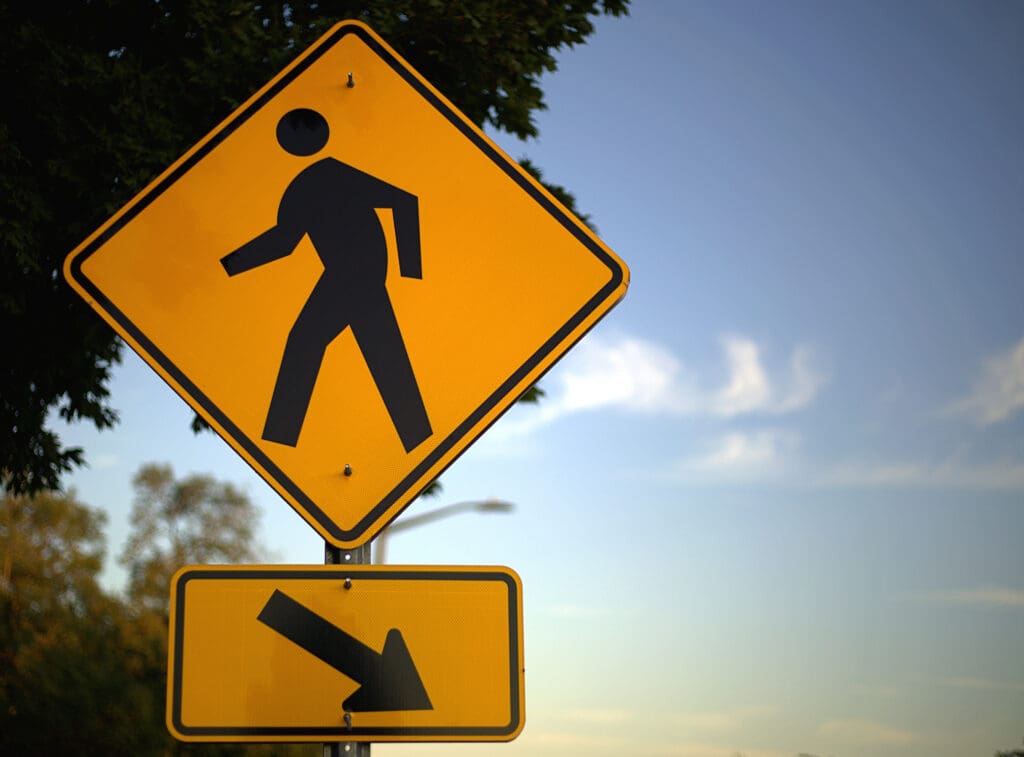
The corridors where nighttime pedestrian crashes cluster locally
In Columbia, downtown near the University of Missouri campus is the clearest hot spot after dark. You’ve got dense student foot traffic, late-evening activity, and drivers moving through a grid that fills and empties fast, making for a difficult mix once the sun sets early. If you were hit walking downtown, a Columbia pedestrian accident lawyer who knows those specific blocks can be the difference in how the story gets told later.
In Springfield, nighttime pedestrian crashes tend to cluster along high-traffic arterials like Kearney Street and Glenstone Avenue, where wide lanes, heavier speeds, and gaps between crossings leave people on foot exposed. Jefferson City sees its own version of this on busier through-streets as evening darkness arrives earlier each winter.
The common thread isn’t reckless walking. It’s shorter days, earlier darkness, and more people on foot during dark evening commutes, with the season itself raising the odds.
“But they were wearing dark clothes” — how insurers shift blame
Here’s the part the safety articles skip. After a nighttime crash, the driver’s insurer reaches for one argument again and again: the pedestrian wasn’t visible enough. They’ll point to your clothing color, the lighting, where you crossed, or whether you were looking at your phone.
Reflective gear is smart, and we recommend it. But not wearing it is not a crime, and it does not automatically make a crash your fault. The adjuster’s goal is to inflate your share of responsibility, because every percentage point they pin on you is a percentage point off what they may owe. That’s exactly why the fault/visibility angle in a pedestrian accident claim deserves a careful, documented response.

What to do in the first hour if you’re hit as a pedestrian
Those first minutes shape everything that follows. If you’re able:
- Get to safety and call 911. A police report creates an official record.
- Get checked by a medical professional, even if you feel okay (that’s a health decision, not legal advice, as some injuries surface later).
- Document the scene: take photos of the vehicle, the roadway, lighting, and your position. Ask a bystander if you can’t.
- Collect the driver’s and any witnesses’ information.
- Don’t accept blame and don’t give the other driver’s insurer a recorded statement before you’ve gotten advice.
- Keep the clothing and any reflective gear you were wearing, as it can rebut a “not visible” argument.
Then talk to a lawyer about your personal injury claim, especially if injuries are serious or catastrophic.
If you or someone you love was hit while walking, the insurer is already building its version of what happened. Talk to us first. Reach the team through our contact page or at tolbertbeadle.com, and let us help you tell the accurate version.
Walking after dark FAQs
Is it illegal to walk at night wearing dark clothes in Missouri?
No. Missouri has no law banning walking after dark or wearing dark clothing. It’s a visibility and fault issue, not a legal prohibition — but being harder to see can raise your crash risk and give an insurer an argument.
Who is at fault if a pedestrian is hit at night?
It depends on the facts — where the person was crossing, whether the driver was using due care, speed, lighting, and signals. Missouri drivers owe the highest degree of care, but pedestrians also have a duty to use reasonable care. Fault is decided case by case.
What should I do right after being hit while walking?
Get to safety and call 911, seek a medical evaluation, document the scene and vehicle, collect driver and witness information, avoid giving the other insurer a recorded statement, and keep the clothing you were wearing. Then speak with an attorney.
Do drivers always have to yield to pedestrians in Missouri?
Not always. Drivers generally must yield at crosswalks and intersections, but a pedestrian crossing mid-block or against a signal may need to yield to traffic. Right-of-way isn’t absolute, as both drivers and pedestrians owe care.